
Is It Necessary to Stake Tomatoes
Before we start, you may wonder what’s wrong with sprawling tomatoes? In other words, do we have to stake tomatoes? And the answer is yes, staking tomatoes is necessary, especially for indeterminate tomatoes that continue to grow throughout the growing season. Here’s why staking is important:
- Support for Growth: Tomato plants, particularly indeterminate varieties, can grow quite tall and may not be able to support the weight of their fruit on their own. Stakes provide the necessary support to keep the plants upright.
- Improved Air Circulation: Staked tomato plants have better air circulation around them. Good air circulation reduces the risk of diseases like fungal infections, which are common in dense, moist environments.
- Keeps Fruit Off the Ground: Staking helps keep the tomato fruit off the ground, reducing the risk of rot and damage from insects and soil-borne diseases.
- Easier Harvesting and Maintenance: Staked plants are easier to manage and harvest. The fruit is more visible and accessible, and routine tasks like pruning and inspecting for pests become simpler.
- Space Efficiency: Staked tomatoes take up less space in the garden, allowing for more efficient use of the area. This is particularly beneficial in smaller gardens.
Step 1: Determine the Type of Your Tomatoes
The first step is understanding the type of tomatoes you have. There are two main types: determinate and indeterminate.
Determinate tomatoes grow to a set size and bear fruit over a short period. They are ideal for smaller spaces and often don’t require extensive staking. Common in hybrid varieties, these tomatoes can usually be identified by checking the seed packet or plant label for terms like ‘bush’ or ‘compact’.
Indeterminate tomatoes are larger plants with a longer fruit-bearing period. They benefit greatly from sturdy staking due to their size and the weight of their fruit.
Step 2: Caging or Staking
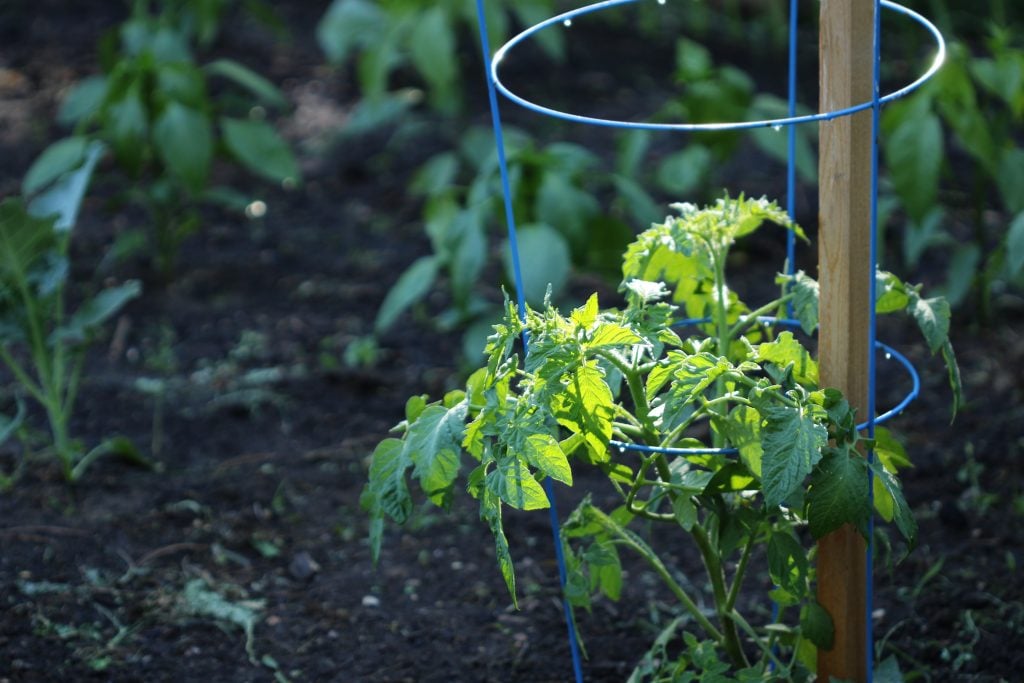
There are two ways to stake tomatoes, caging or staking. In general, caging tomatoes is ideal for determinate varieties. Tomato cages support the plant as it grows. For indeterminate tomatoes, larger cages are needed due to their taller growth.
On the other hand, staking tomatoes is a more traditional and cost-effective method. For indeterminate tomatoes, stakes should be around six to seven feet tall. For determinate varieties, wooden stakes should measure approximately 2 inches in width and height and range from 4 to 7 feet in length, tailored to the cultivar’s size.
Drive the stake at least a foot into the ground, around five inches away from the plant. Secure the plant to the stake with soft ties, adding more as the plant grows.
Step 3: Florida Weave, Single Stake, or Double Stake
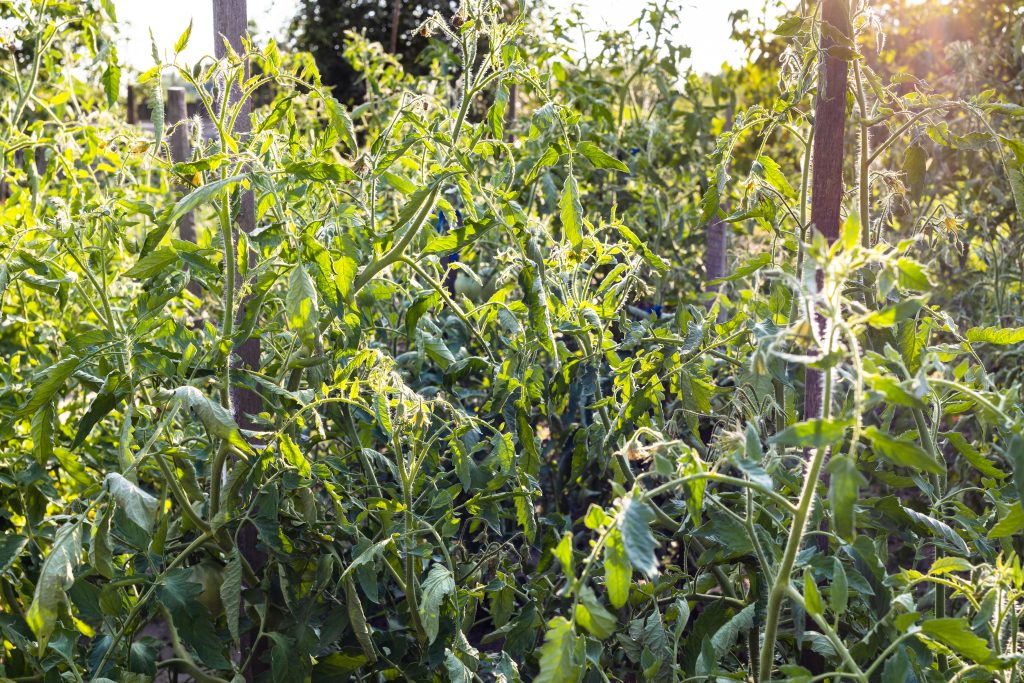
While staking tomatoes, there are mainly 3 approaches you can try, each with its own features:
- Florida Weave: Suitable for large gardens. Place stakes at the ends of two rows, weaving twine in front and behind alternating plants.
- Single Stake: Ideal for potted plants, raised beds, or small gardens. Stake each plant individually and tie the vine to the stake, adjusting as the plant grows.
- Double Stake: Best for heavy fruiting varieties. Use two stakes on either side of the plant for robust support.
Step 4: Prune Stakes Tomatoes
Regularly trim your staked tomatoes, as pruning is particularly advantageous for plants supported by a single stake. This process entails removing the side shoots or suckers that emerge at the leaf bases along the main stem. These shoots are excess foliage that won’t bear fruit.
By eliminating them, you reduce the overall leaf volume, simplifying the support of the tomato plant with a single stake. Additionally, cutting off these side shoots focuses the plant’s energy toward producing fruit, offering a tasty benefit for your minimal pruning efforts.
FAQs about How to Stake Tomatoes
- When should I start staking tomatoes?
Staking should ideally be done soon after planting the tomato seedlings in your garden. This timing helps to avoid root damage and ensures that the plants are supported as they begin to grow. The best practice is to stake your tomatoes before they are about 2-3 inches tall, ensuring that the stakes are in place before the plants become too large and unwieldy.
- What is the best way to stake tomato plants?
The most effective way to stake tomato plants is to use sturdy stakes that are at least 6 feet tall and 1 to 2 inches in diameter, ensuring they can support the plant’s growth. Drive the stake about 4-6 inches away from the plant to avoid damaging the roots, and bury it deep enough (about 12-18 inches into the ground) for stability.
As the plant grows, gently tie it to the stake at intervals of 8-12 inches using soft materials like cloth strips or special plant ties. It’s important to regularly check and adjust these ties as the plant matures.
- Is it better to cage or stake tomatoes?
Cages are often better for determinate tomato varieties as they provide ample support for the bushier, more compact growth habit of these plants. Stakes, on the other hand, are ideal for indeterminate tomato varieties, which grow taller and benefit from the vertical support that stakes provide. Ultimately, both methods are effective, and the choice largely depends on the gardener’s preference and the specific needs of the tomato plants.
More about Growing Tomatoes:
Why Are My Tomato Leaves Curling




Leave a reply
You must be logged in to post a comment.